
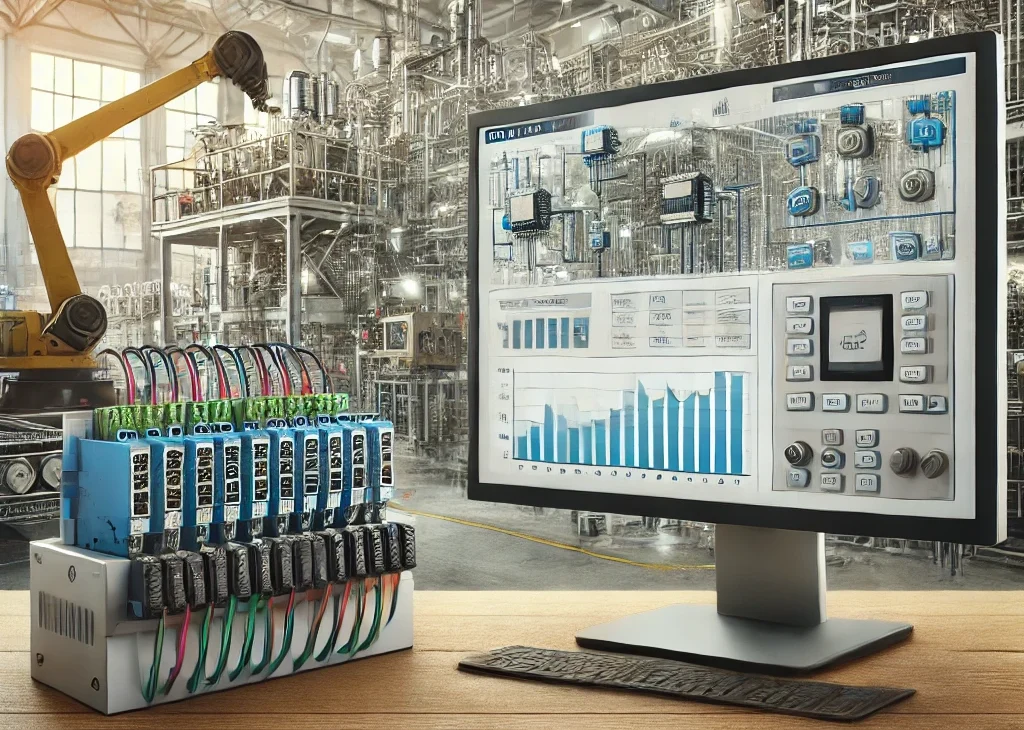
For engineers entering the field of industrial automation, understanding PLC (Programmable Logic Controllers), SCADA (Supervisory Control and Data Acquisition), and HMI (Human-Machine Interface) is essential. These technologies are critical in monitoring, controlling, and optimizing industrial processes. As a mentor, here’s a comprehensive guide to help new engineers begin their journey in PLC, SCADA, and HMI.
Step 1: Understand the Basics of Automation
Before diving into the technologies, grasp the fundamentals of automation:
-
- What is Automation? Automation uses technology to perform tasks with minimal human intervention.
-
- Key Concepts: Learn about control systems, sensors, actuators, and feedback loops.
Resources like “Industrial Automation and Control Systems” by Terry Bartelt or websites like AutomationDirect are excellent starting points.
Step 2: Learn About PLCs (Programmable Logic Controllers)
PLCs are the cornerstone of automation, controlling machinery and processes. Start with these steps:
-
- Understand the Basics:
-
- PLCs are rugged industrial computers designed to execute control tasks.
-
- Learn about their hardware, including input/output modules and CPUs.
-
- Understand the Basics:
-
- Master PLC Programming:
-
- Begin with Ladder Logic, a visual programming language resembling electrical circuit diagrams.
-
- Explore other languages like Structured Text (ST) and Function Block Diagrams (FBD).
-
- Master PLC Programming:
-
- Practice with Simulations:
-
- Use software like LogixPro, Factory I/O, or Tia Portal to simulate and test your programming.
-
- Practice with Simulations:
-
- Work with Real PLCs:
-
- Gain hands-on experience with hardware like Siemens S7-1200, Allen-Bradley CompactLogix, or Mitsubishi FX series.
-
- Work with Real PLCs:
Step 4: Understand HMIs (Human-Machine Interfaces)
HMIs are the graphical interfaces that connect operators with automation systems. They make SCADA systems and PLCs accessible to humans.
-
- What is an HMI?
-
- HMIs display real-time data, alarms, and process information through graphical dashboards.
-
- They enable operators to issue commands to PLCs or SCADA systems.
-
- What is an HMI?
-
- HMI Design Basics:
-
- Focus on creating intuitive and user-friendly interfaces.
-
- Use clear visuals like gauges, trends, and alarms to communicate system performance effectively.
-
- HMI Design Basics:
-
- Learn HMI Software:
-
- Explore tools like FactoryTalk View, Ignition Perspective, and WinCC Advanced.
-
- Use free or trial versions to practice designing interfaces.
-
- Learn HMI Software:
-
- Develop Visualization Skills:
-
- Understand the principles of effective UI/UX design in industrial environments.
-
- Focus on minimizing operator errors by making information clear and actionable.
-
- Develop Visualization Skills:
Step 3: Dive Into SCADA Systems
SCADA systems provide monitoring and control capabilities for large-scale industrial operations. Here’s how to get started:
-
- Understand SCADA’s Purpose:
-
- SCADA collects real-time data from PLCs and other devices, enabling remote monitoring and control.
-
- It’s widely used in industries like power generation, water treatment, and oil and gas.
-
- Understand SCADA’s Purpose:
-
- Learn SCADA Software:
-
- Familiarize yourself with tools like Ignition, Wonderware, Citect SCADA, or WinCC.
-
- Many platforms offer free trials or educational versions.
-
- Learn SCADA Software:
-
- Explore Data Communication Protocols:
-
- Study protocols like Modbus, OPC UA, and Ethernet/IP to understand how SCADA communicates with devices.
-
- Explore Data Communication Protocols:
Step 5: Build a Strong Foundation in Electrical and Control Systems
A solid understanding of electrical and control systems will enhance your expertise:
-
- Electrical Basics: Study wiring diagrams, relay logic, and power distribution systems.
-
- Control Systems: Learn about PID controllers, process optimization, and system dynamics.
Step 6: Enroll in Training and Certifications
Formal training and certifications are vital for structured learning and career growth:
-
- Online Courses:
-
- Platforms like Udemy, Coursera, and LinkedIn Learning offer automation courses covering PLC, SCADA, and HMI.
-
- Online Courses:
-
- Certifications:
-
- Aim for certifications like Siemens Certified Programmer, Rockwell Automation Training, or vendor-specific HMI certifications.
-
- Certifications:
-
- Workshops:
-
- Attend workshops or bootcamps in industrial automation to gain practical experience.
-
- Workshops:
Step 7: Work on Real-World Projects
Practical experience is key to mastering PLC, SCADA, and HMI:
-
- Start Small:
-
- Work on basic projects like controlling lights, motors, or pumps using a PLC and HMI.
-
- Start Small:
-
- Simulate SCADA Systems:
-
- Set up virtual SCADA environments and connect them with simulated PLCs and HMIs.
-
- Simulate SCADA Systems:
-
- Advanced Projects:
-
- Integrate PLCs, SCADA, and HMIs to automate a small process, like monitoring a simulated conveyor belt or water tank system.
-
- Advanced Projects:
Step 8: Stay Updated on Industry Trends
Industrial automation evolves rapidly. Stay ahead by:
-
- Reading Industry News:
-
- Follow websites like Automation World and Control Engineering.
-
- Reading Industry News:
-
- Exploring Advanced Topics:
-
- Study emerging trends like Industry 4.0, IIoT (Industrial Internet of Things), and edge computing.
-
- Exploring Advanced Topics:
-
- Networking:
-
- Join LinkedIn groups and forums dedicated to PLC, SCADA, and HMI.
-
- Networking:
Step 9: Develop Problem-Solving and Troubleshooting Skills
Troubleshooting is a critical skill in automation:
-
- Debugging PLC Programs: Practice identifying and fixing logical errors.
-
- SCADA Troubleshooting: Learn to resolve communication issues and analyze system performance.
-
- HMI Optimization: Test and refine your interfaces for better user interaction and efficiency.
Step 10: Build a Portfolio to Showcase Your Skills
Document your projects to demonstrate your abilities:
-
- Project Reports: Include detailed explanations, screenshots, and videos of your PLC, SCADA, and HMI implementations.
-
- Share Your Work: Publish your portfolio online through a website, LinkedIn, or GitHub.
Recommended YouTube Channels for Learning
To further your knowledge, explore these YouTube channels:
-
- RealPars: Beginner-friendly content on PLCs and SCADA.
-
- SolisPLC: Practical tutorials on industrial automation, including HMI design.
-
- The Engineering Mindset: Covers control systems and industrial technologies.
-
- Automation Tech Tips: Tutorials on PLC, SCADA, and HMI systems.
-
- Hegamurl: Engineering content and gaming? Here you go!
Conclusion
Embarking on a career in PLC, SCADA, and HMI opens doors to exciting opportunities in industrial automation. By mastering these technologies, you’ll play a crucial role in designing, operating, and optimizing automated systems.
As an experience engineer, my advice is simple: Stay curious, practice consistently, and never shy away from challenges. The journey may be demanding, but the rewards are immense. With dedication, you’ll become a skilled engineer shaping the future of automation.
